President Announces Nationwide Lockdown as South Africa Responds to COVID-19 Crisis
South Africa enters a historic moment as President Cyril Ramaphosa announces a nationwide lockdown in response to the rapid spread of COVID-19, a decision that immediately changes the direction of daily life across the country.
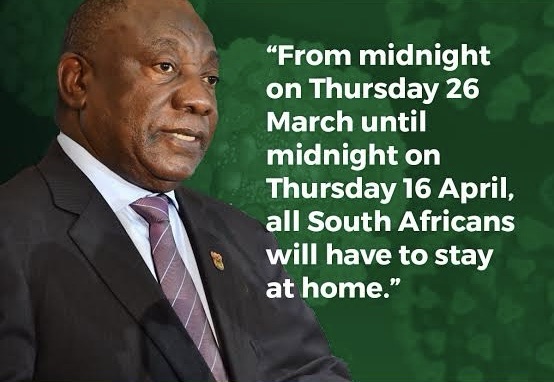
The announcement confirms that from midnight on 26 March 2020, strict restrictions on movement will take effect for 21 days. Citizens are instructed to remain at home except for essential reasons such as buying food, seeking medical care, collecting social grants, or performing essential services. Schools remain closed, gatherings are prohibited, and non-essential businesses must shut their doors.
For many South Africans, the speech carries both reassurance and fear. On one hand, there is relief that strong leadership is being shown during a growing public health emergency. On the other, the reality of what lockdown means begins settling heavily on households already facing financial strain and uncertainty.
This is not simply a medical decision, it is a national sacrifice. Informal traders, domestic workers, taxi operators, restaurant owners, and thousands of workers who depend on daily income are immediately confronted with the question of survival. Staying home is necessary for public health, but for many, staying home also means losing the ability to provide for their families.
Across KwaZulu-Natal, communities react with urgency. Supermarkets become crowded as residents rush to buy essentials. Pharmacies report increased demand for hygiene products, while social media fills with confusion, fear, and misinformation. Community leaders are forced to remind residents that discipline, not panic, will determine how successfully the country responds.
The lockdown reveals something deeper about South Africa, inequality shapes how people experience crisis. Social distancing sounds simple in suburban homes, but far more complicated in crowded informal settlements where water access and sanitation remain daily struggles.
Still, the announcement represents a necessary step. The virus does not wait for perfect conditions, and delay would only increase the danger. The success of this lockdown will depend not only on government enforcement, but on public cooperation and social solidarity.
The roads grow quieter, schools close their gates, and the country enters unfamiliar territory, hoping that temporary sacrifice will protect the future.